Rubens likes to enjoy life.
Rubens's story
Between computers, bars and carnival, he just wants to enjoy the city he also helps keep running.
IT technician.
Degree in computer science.
Fond of bars and street parties.
Dream: to live a happy life.The city invites everyone to the party. It does not always prepare for whoever stays until the end.

It is Friyaaay!!!!
Time to meet up with friends.
After a busy week between one system and another, it is time to recharge the social battery and enjoy the best of the city with the best company.

The problem shows up at the worst time.
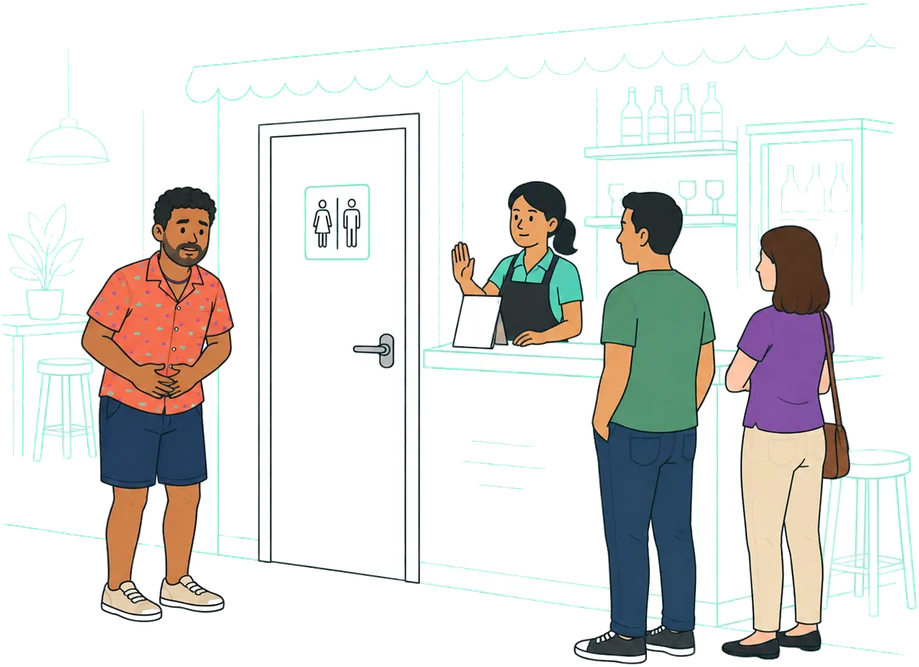
The restroom is customers only.
A half-hour queue at the bar, a portable toilet four blocks away and the parade moving on. He tries three doors and hears no at every one.
So he does...
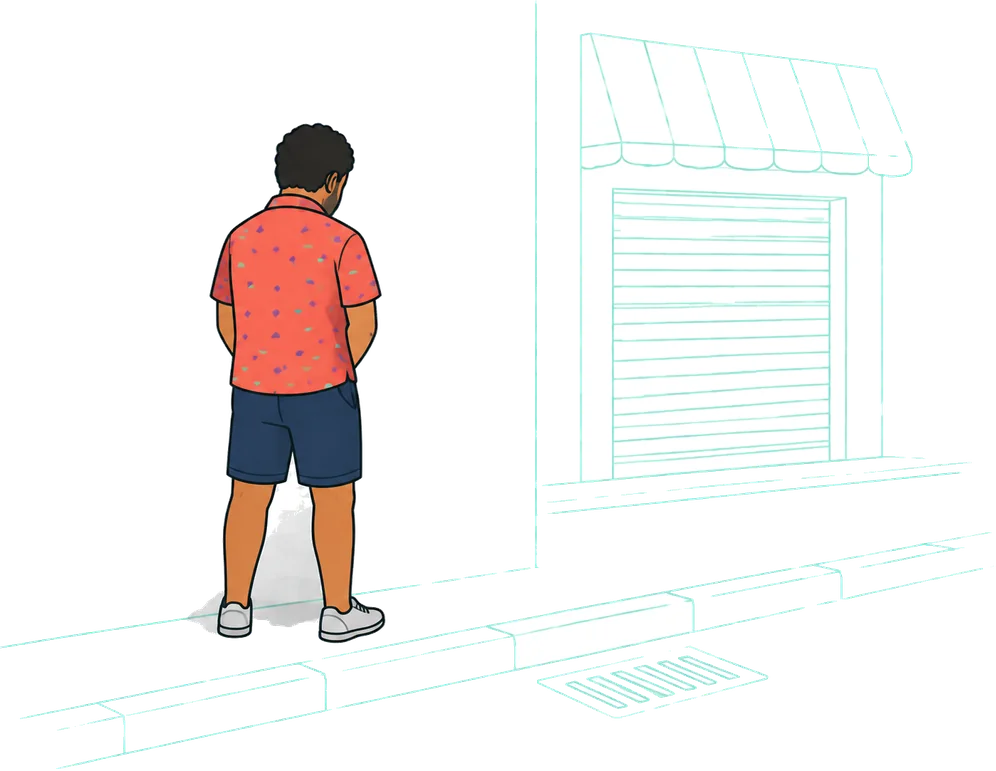
The solution is the corner of a wall.
Not because he wants to. Because nothing was left. On Monday the pavement wakes up with the smell, and the cleaning bill lands on the city.
Not any more.
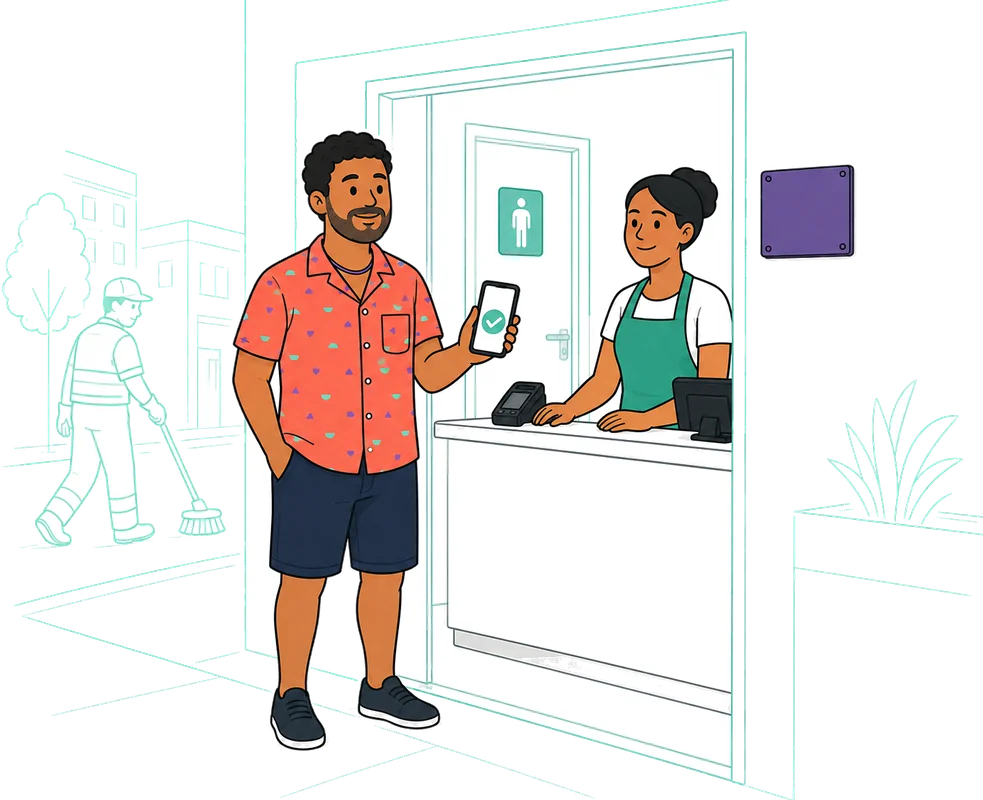
The city hall dared to act.
Besides the many places listed on Guentaí, the city opened its own spots at much lower prices. It is a huge saving for a city that now smells better.





What the city gains
- Restrooms with no construction and no container
The network is already standing. No rental, transport, cleaning or vandalism of portable cabins.
- Pays only for what was used
No daily rate for idle equipment. Every access is a line item with date and amount.
- Coverage where the street fills up
Shops are spread across wherever the crowd moves, not at three points picked on a map.
- Less street urination, less washing
Every access is one corner that does not become an open-air toilet by Monday morning.
How to create the account and issue the vouchers
Download the Guentaí app and complete the registration of whoever answers for the company.
Sign in at portal.guentai.com with the same credentials from the app.
In the portal, open Fleet, enter the company tax ID and attach the registration document. The legal name is filled in automatically.
Once the company is approved, deposit the balance in Vouchers.
Create the campaign, give it a name and an end date, and build the list of people, one by one or by CSV, with the amount for each.
Start the campaign. The voucher becomes available to claim in the app of each person on the list.
The voucher is only handed out when the campaign starts, and it only becomes the person’s credit when they claim it in the app. Every claim and every use shows in the portal. Whatever nobody claims by the end date goes back in full to the company balance, and credit already claimed does not expire.
Open the portalCreate your accountTwo ways to pay, under the same account
- Prepaid credit, by tax id
This is the voucher route. The company tops up, splits the amount and sends it to a list of tax ids inside a campaign. Whoever receives it redeems in the app and the balance sits in their wallet, with no expiry, to use at any Guentaí point.
- Corporate account, on the company card
The company registers a card, adds the tax ids and sets a monthly cap per person. The card shows up in those people's wallets as another payment method and each access is charged right away, within the cap. The usage statement exports to PDF.
Frequently asked questions
How does procurement work for a city government?
The route is the same: registration in the app, portal with the same credentials and, inside it, the body's tax id and registration certificate. The contracting and budgeting route follows the administration's own rules, and the Guentaí team supports that process.
Is it only for events or does it work all year?
Both. A campaign can last one carnival weekend or a full year in a critical area. Each cut is its own campaign, with its own name, dates and budget.
Who gets paid for the access?
The venue that opened its restroom, at the price it set itself. The city funds that amount, and the person sees the price before confirming.
Do we have to onboard venues?
No. Any shop signs up on its own and decides whether to take part. The city neither builds nor runs a network, it only funds access for those who need it.
What if there is no point near the event?
The network grows as local shops join. Sharing the extra income page with venues in the area before the event is the fastest route, because the owner signs up themselves and it takes minutes.
Does the city see where the person went?
With credit, no: the administration sees how much was spent, never where. With the corporate card, yes: every access paid with the card shows in the portal, with venue, date and amount.
How do we cap the spend for an event?
By the amount topped up in the campaign and the amount set per tax id. Whatever nobody redeems by the end date goes back to the balance in full.
Can we distribute without a list of tax ids?
Credit is always distributed by tax id, because that is what keeps the money from becoming open spending. For events, the route is the Support Network: the city funds the venue, and the benefit applies to whoever arrives there.
Does this replace portable toilets?
In most cases yes, and without the logistics. Where no shop is open, like a park at night, cabins are still needed. The two coexist.
People out at night need a restroom too
The city can pay for that access at shops that are already open, and Monday’s cleaning bill gets smaller.
Open the portalCreate your account